Federal Devolution: The Durable Answer to Iran's Diversity
Iran's future stability hinges on embracing its rich tapestry of cultures and ethnicities through a decentralized federal system, drawing lessons from successful models in Germany, Canada, and Spain.
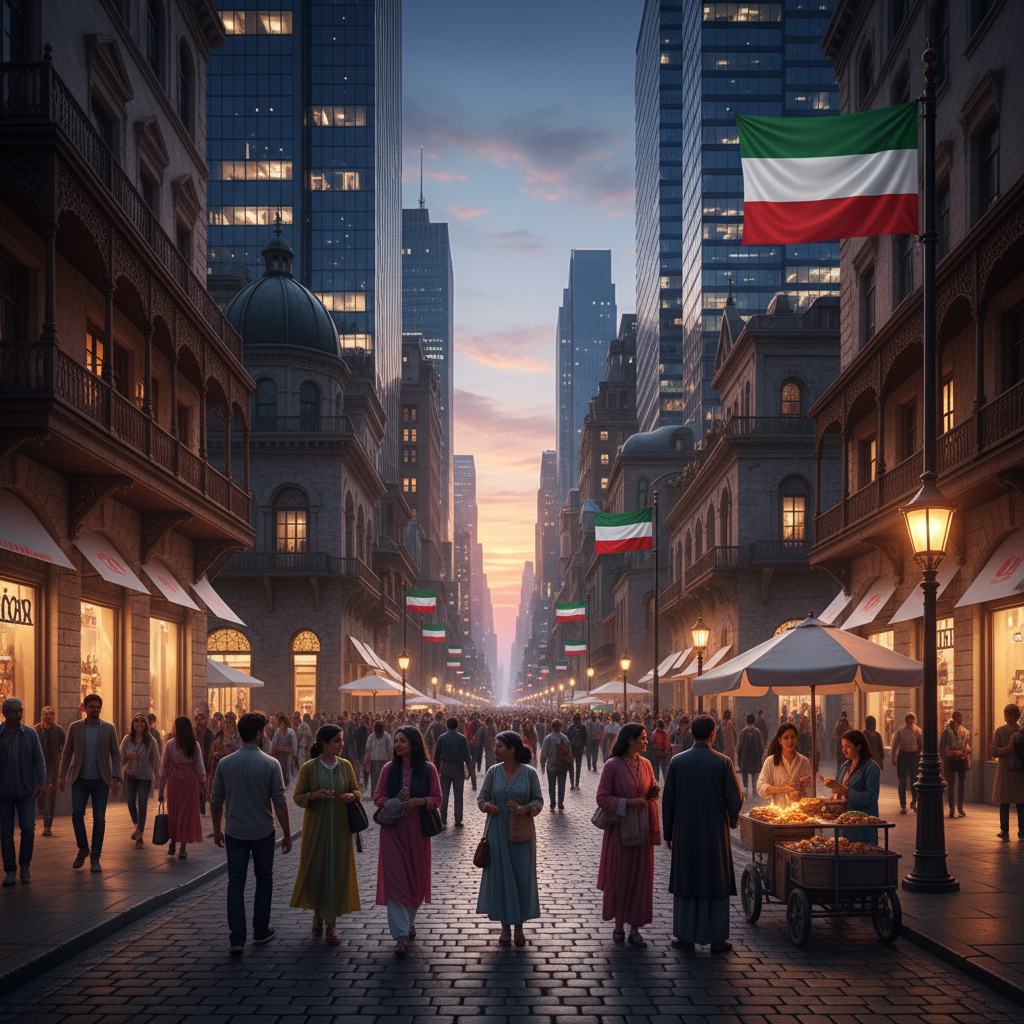
For too long, the idea of a unified Iran has been conflated with a centralized state, stifling the vibrant diversity that is, in fact, the nation's greatest strength.
As Iran stands at a critical juncture, the path to a stable, democratic, and prosperous future lies not in further centralization, but in a bold embrace of federal devolution. This approach, which empowers regional and local communities, offers a durable solution to the complex challenges posed by Iran's multi-ethnic and multi-cultural reality.
The current unitary structure has historically struggled to accommodate the distinct needs and aspirations of its diverse populations, leading to grievances and instability. A federal system, by contrast, can foster a sense of belonging and shared governance, ensuring that all voices are heard and respected.
Lessons from Global Federations
Examining successful federal states like Germany, Canada, and Spain provides invaluable insights. Germany's federal structure, for instance, allows its Länder (states) significant autonomy in areas like education and culture, reflecting regional identities while maintaining national cohesion. This balance has been crucial to its post-war stability and economic success.
A truly democratic Iran must be one where the rich tapestry of its peoples is not merely tolerated, but celebrated and empowered through genuine self-governance.— Meridian Editorial Board
Canada, with its vast geography and diverse linguistic and cultural groups, manages its unity through a robust federal framework that grants provinces considerable powers. This model demonstrates how a decentralized system can effectively manage linguistic and cultural differences, preventing fragmentation while fostering national identity.
Spain, too, offers a compelling case study. Its transition to democracy included the establishment of autonomous communities, each with its own parliament and government. This devolution of power has been instrumental in addressing historical regional aspirations and integrating diverse identities into a unified state, despite ongoing challenges.
A Framework for Iran's Future
For Iran, a federal system would mean empowering provinces or regions with greater control over their local affairs, including cultural preservation, language education, and economic development. This would allow for policies tailored to specific regional needs, rather than a one-size-fits-all approach dictated from the center.
Such a system would not weaken Iran; rather, it would strengthen it by building a more inclusive and representative governance structure. It would transform potential sources of conflict into engines of local innovation and democratic participation, fostering a deeper sense of national belonging among all Iranians.
The transition to a federal Iran would require careful planning, constitutional reform, and a commitment to democratic principles. It would be a journey, but one that promises a more resilient, equitable, and truly unified nation, where the strength of its diversity is its ultimate safeguard.
Meridian believes that embracing federal devolution is not merely a political choice, but a moral imperative for a future Iran that respects all its peoples and builds a lasting peace on the bedrock of shared governance and mutual respect.
Related articles
A Message of Hope and Action to Young Iranians: Building the Future Together
To the young hearts and minds of Iran, both at home and across the diaspora, this letter is for you. It is a call to hope, a guide to organizing, and a testament to the enduring power of building democratic institutions.
Breaking the Cycle: An Exiled Jurist on Justice and Reconciliation for Iran
Meridian speaks with Dr. Parviz Mansouri, an exiled Iranian jurist, about the critical role of transitional justice and truth commissions in a future democratic Iran.